
By Scott Haugen
A flurry of white wings caught me off guard as I stumbled from one tussock to another. Body shifting left on the tundra, I shouldered the gun and swung on a bird as it fled to the right. But the willow ptarmigan kept turning, fast.
My first shot wasn’t even close. Feet set, shoulders somewhat squared, the next shot was solid. The bird rolled on the dry tundra. I’d just shot my first bird with Browning’s new A5 20 gauge.
The next covey flushed straight away. Those shots were simple. A double fell from that flush.
Over an hour would pass before my buddy, Rafe Nielsen, and I would get on another flock of tundra grouse. By then the wind was rocking, holding steady at 20 mph with gusts exceeding that. Birds were edgy, holding on the backside of open points, out of the wind.
It was the last week of August and the willow ptarmigan were in their summer plumage. We covered just shy of six miles that afternoon. Though we had enough birds for appetizers, we knew–given the forecasted windy conditions–we had our work cut out for us the rest of the week.
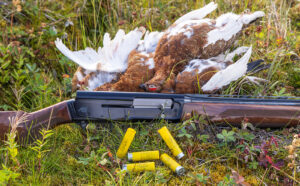 We were on the upper end of the Alaska Peninsula, along the banks of the breathtaking Egegik River. We were on a cast and blast adventure with Becharof Lodge on the Egegik River, whom I first visited 19 years ago (becharoflodgefishing.com). I’ve been going back nearly every year since, both for the coho fishing and ptarmigan hunting action. Over the past three years, ptarmigan numbers along the Egegik River have been the best I’ve ever seen. Hunting ptarmigan along the Egegik River–and surrounding tundra–has become a cherished part of the trip for many clients heading to Becharof Lodge. “We have some folks returning each August, just for a day or two of ptarmigan hunting,” shared Mark Korpi, co-owner of Becharof Lodge. The ptarmigan season opens on August 10 and there’s a 10 bird a day limit in this game management unit. “Most folks shoot enough for appetizers in camp, but some also want to take ptarmigan meat home. They’re delicious to eat in the early season,” Korpi notes.
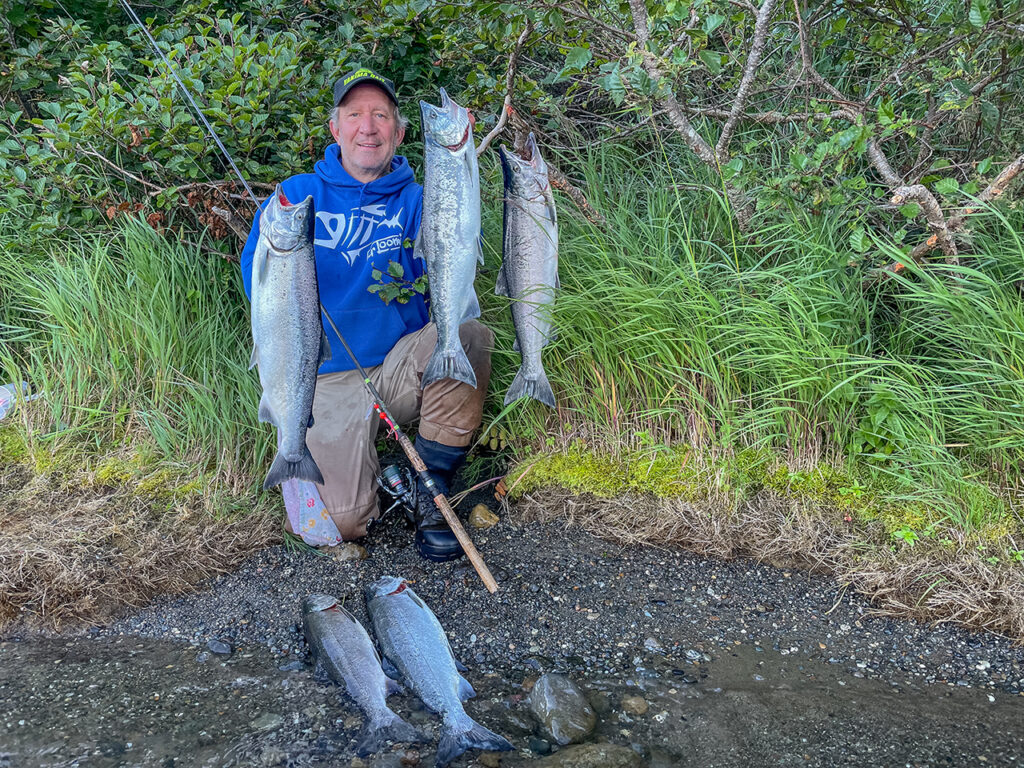
The next morning Nielsen and I were up early, hitting the river for coho. I pounded out a quick limit by casting Mag Lips and Flash-Glo spinners. Nielsen landed his share of coho on flies he hand-tied. There’s a level of gratification that comes with that.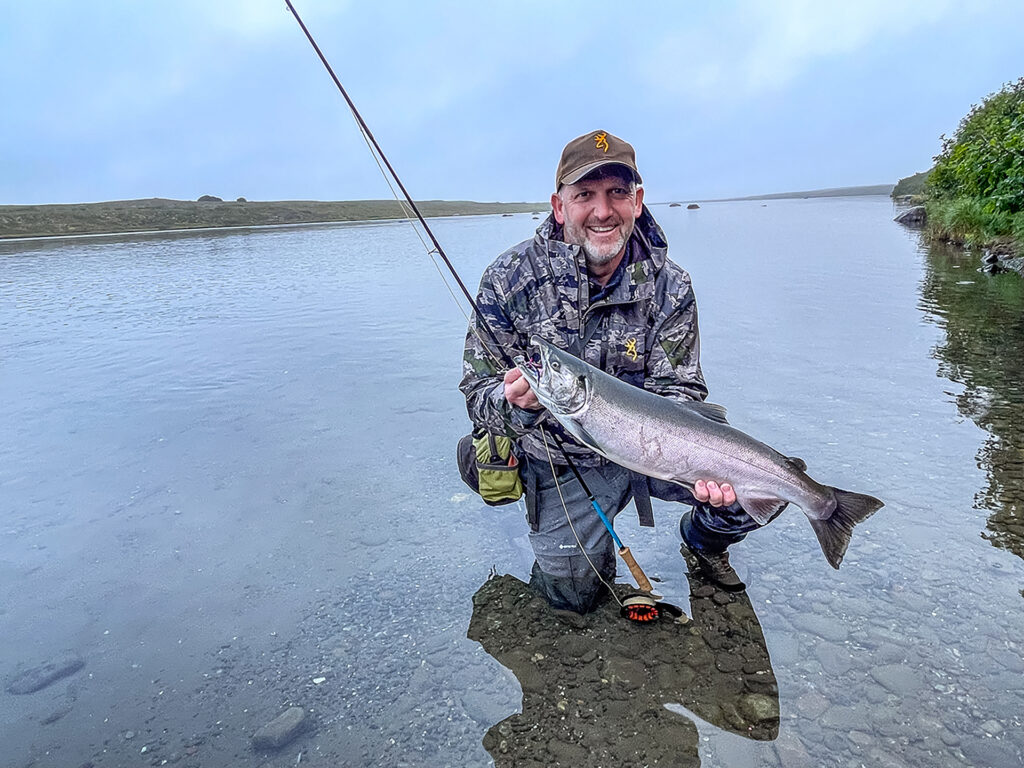
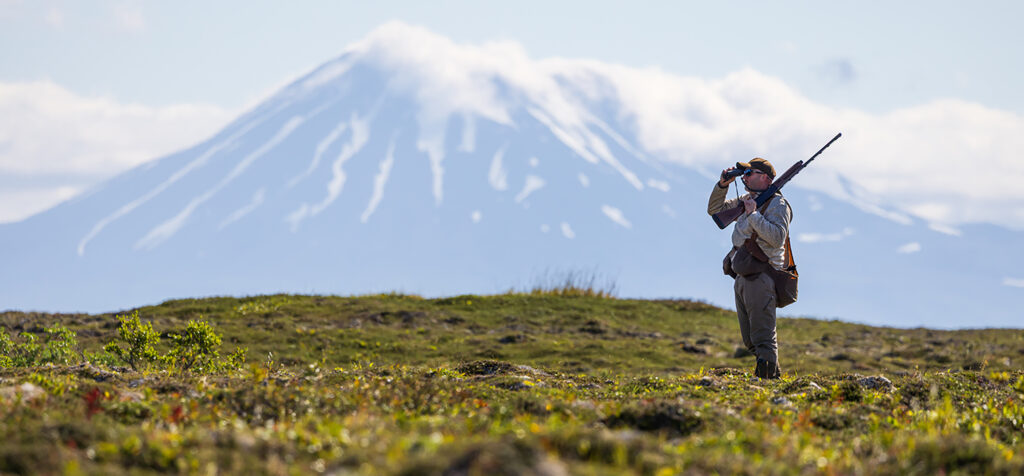
After a couple solid hours of fishing, we grabbed the A5s and hit the tundra. The ptarmigan hunting here is self-guided, adding to the joy of the adventure. These were the first A5s in the new 20 gauge to hit Alaskan soil. It was a fitting place in which to test the little cousin to one of the most famous shotguns in history, Browning’s A5 12 gauge.
The Browning A5 20 gauge is an inertia gun. It weighs only 5 pounds 9 ounces. We hiked over six miles each of the next four days, logged eight miles one day. All but one of those days saw us facing winds upwards of 30 mph, with even heavier gusts. Shooting conditions were far from easy. The conditions, and the birds, were the ultimate test for the new A5 20 gauge.
Last summer the berry crop was lacking on this part of the Peninsula. Crow berries abounded within a few hundred yards of the river, but inland they were void. An unseasonably dry summer squelched any berry propagation. Low bush cranberries were almost non-existent, and I didn’t see a single salmon berry or blueberry. Rare. Typically, blueberries blanket the tundra for several square miles.
Nonetheless, ptarmigan numbers were high, about as good as I’ve seen in nearly 15 years in this region. We only jumped a few flocks of ptarmigan as they fed on crow berries and green leaves. Most birds we found were seeking shelter from the heavy winds. Finding birds required walking.
After catching a limit of coho on morning number three, Nielsen and I were on a mission to secure limits of ptarmigan. Killing 10 birds each wouldn’t be easy, not in the high winds, and given the fact we agreed to shoot everything on the wing.
Sustained winds of 30 mph prevailed. While ptarmigan flush into a headwind, they’re quick to turn, making for some of the most challenging upland shooting imaginable.
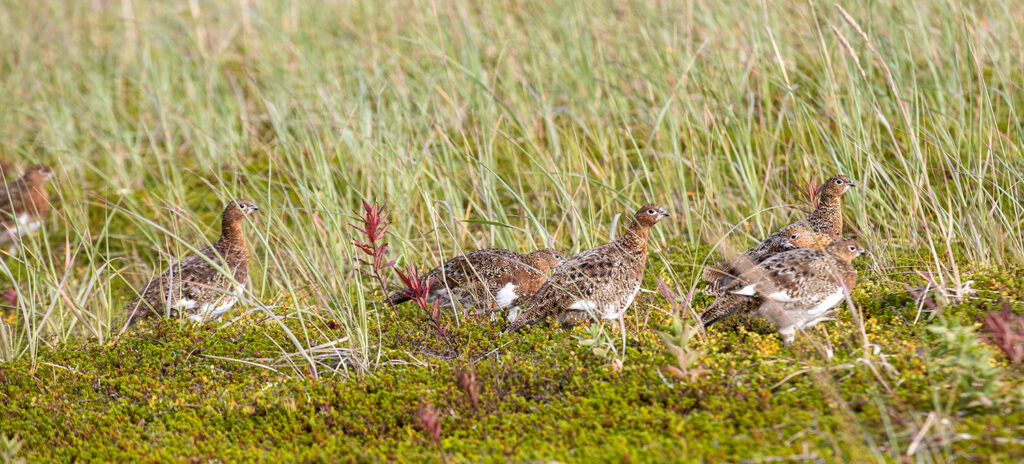
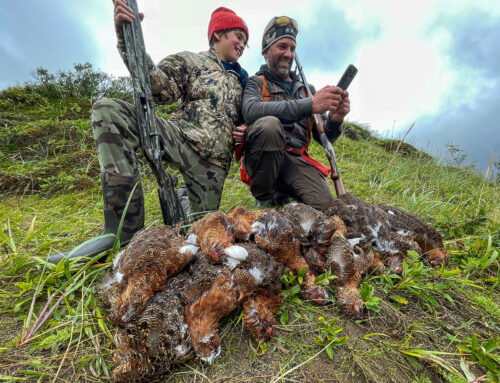
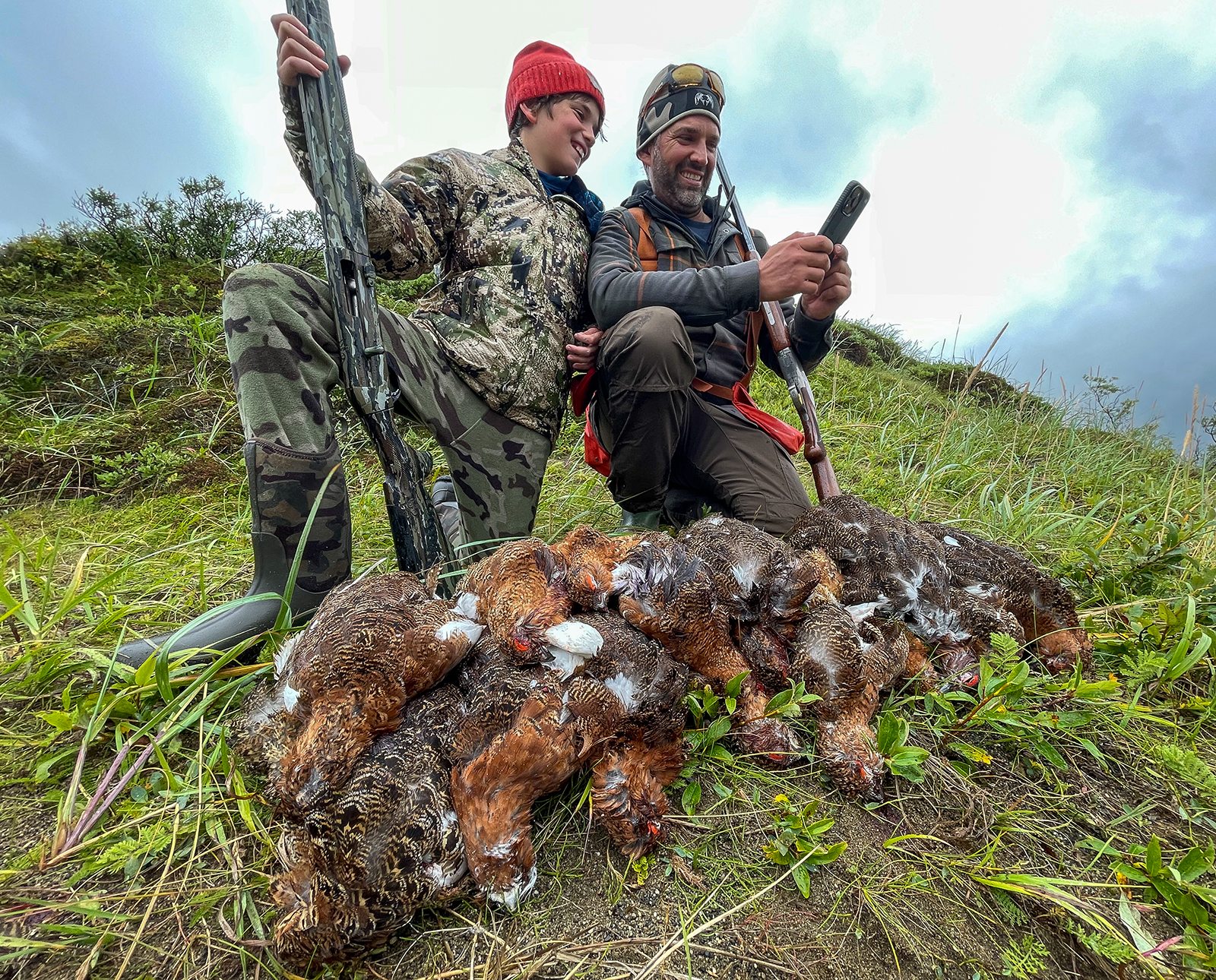
Following three miles of hiking we ran out of crow berries and only had a few birds to show for our efforts. Figuring the ptarmigan would be hunkered down in the sporadic smattering of willows, we split up. Nielsen hunted the south shoreline of a 15 acre pond sunken into the Alaskan tundra. I skirted the northern edge. Nielsen picked up a brace of ptarmigan. I put the move on a family flock huddled on the backside of a barren knoll. Cresting the rolling hill, the instant I popped into view, the ptarmigan took wing. Quickly I raised, picked out a plump bird and fired. It fell. The flock turned away. Two more shots saw a pair of ptarmigan drop. My first triple with the new A5.
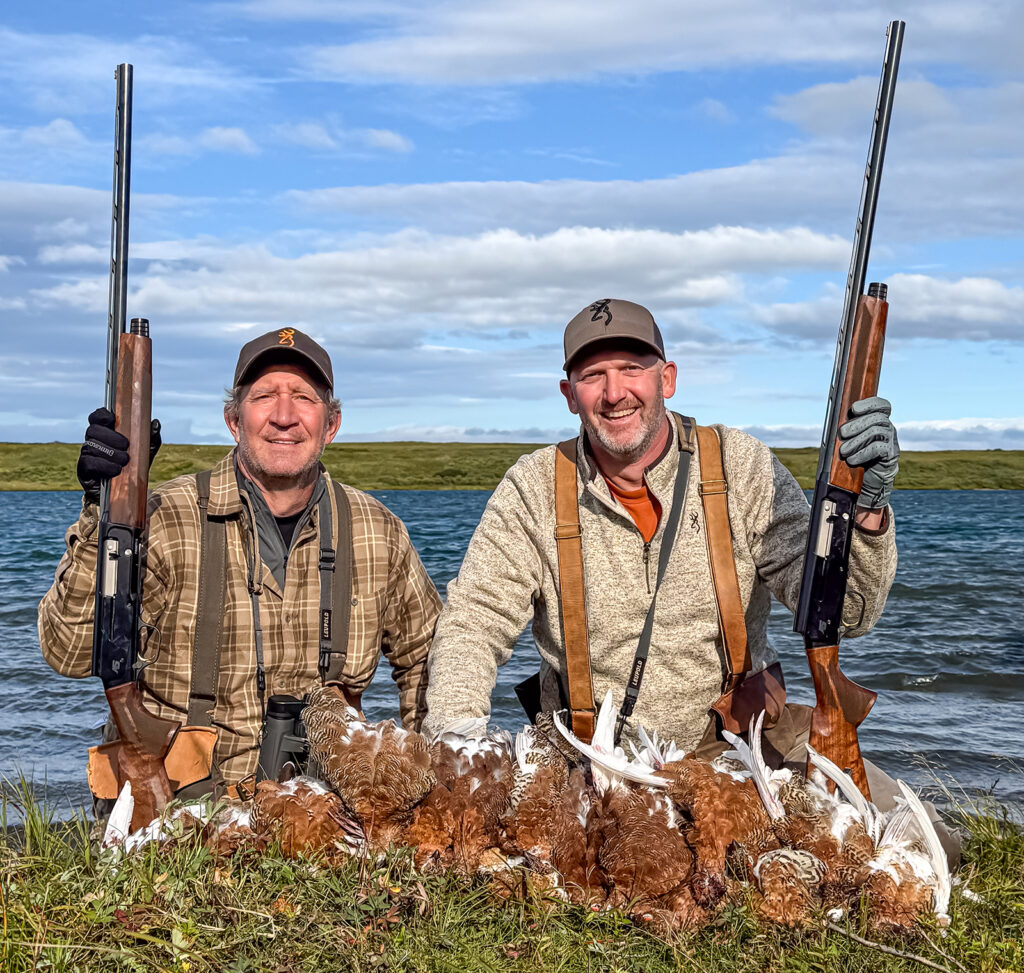 An hour later the wind was still howling. Rain began to fall. Figuring that was the break we needed to concentrate birds, we focused hunting efforts around tall stands of alders, about four miles from the Egegik River. We jumped over 400 birds in a short time. They were already in growing winter flocks, some being comprised of over 50 birds. That many eyeballs made for tough hunting as birds were already on edge. Almost every willow ptarmigan we saw jumped well before we get within shooting range. After some frustratingly failed encounters we hiked back to the banks of the Egegik River, hoping to find ptarmigan in low spots, feeding, out of the wind. The move paid-off. Soon we were cleaning limits of ptarmigan back at Becharof Lodge.
That night we shared our bounty with others in camp. Early season ptarmigan is about the best eating upland bird you’ll ever sink your teeth into.
The next morning we were back on the Egegik River. Once again, Nielsen put the smackdown on some hefty coho with his fly rod and homemade flies. I caught my five fish limit casting Flash-Glo spinners in both pink and chartreuse. By 10:00 a.m. we were hiking across the tundra, A5s in-hand, trying for another cast and blast double. The routine never grows old, and is why so many people keep returning to Becharof Lodge on the Egegik River, me, included.